Caste systems and arranged marriages

When you’re Indian, and in grad school (or anywhere else in a foreign country for that matter), people can come up to you and ask you the most annoyingly-cluelessly-hilarious things. Case in point, last afternoon I was lunching with a bunch of guys (yes, new territory there), few I knew quite well, and few others I met for the first time. Things eventually ended up being — we all talking about, analysing and giving advice to one of the chaps who was having relationship trouble.

Is this a big deal?

Not if it’s a bunch of women doing the exact same thing.

If it’s a bunch of guys, hell yeah it is.

Guys don’t talk about things, they “deal with it”.

Long story short, random hot dance partner was throwing herself at this one guy, and he, in a rejecting-her-sort-of-way, said something akin to “No, I just want to dance”, and now she hates him and treats him like dirt. He doesn’t like being treated like dirt. Of course, the funny part here is — HOT chick was throwing herself at him, HE rejects her, and SHE’s supposedly the crazy one. (“She’s crazy” was his rejection reason.)

And no, none of this has to do with our central story. All of this was just a fun aside.

Where was I? Ahh yes, I, an Indian in an American university, lunching with folk usually clueless about how things are outside their little inward looking circles. Out of the blue (as usual?), someone brings up the caste system. Usually, they know very little and it’s some very generic thing like, “Does it exist?” (of course, not really realising what it entails). But this time, they had some half-correct ideas of the mechanics of the thing, and the questions were more direct. For instance, “Which caste do you belong to?”. Erm, hello, 1. It doesn’t matter 2. You wouldn’t know what to make of it if I told you. With much pestering, I say OK, fine, I’m from the Priest/Teacher/Intellectual class — for lack of a better way of putting it across. The response sort of stunned me. “Oh, so you’re a Brahmin. Aren’t they like the highest rung of the ladder?”. Woah, dude. 1. How much do you really know? and 2. What’s any of this to you?

Things move on, and I figure out this group knows a bit about all these things (more than I do?), and then things get to the next level of complexity. “How favoured are you because of this? I mean, is it easier to get a visa and such?” Hello, the frickin’ visa thing’s handled by YOUR PEOPLE employed by YOUR GOVERNMENT. I doubt they know the specifics enough to make informed racist calls. “What caste is (insert one of the people I work with here)? Would it make a difference if you both knew and you were of a higher/lower caste?”.

And that was when I had to politely change the topic. No, things don’t matter. Few generations ago, people paid a lot more attention to all these details, for now, I barely know anything. Let alone being able to “see a guy on the street”, figure out his social place AND consequently discriminate for/against his interests”. Much to my chagrin, this change didn’t take us too far, and dropped us at another hot favourite, arranged marriages.

This <sarcasm>smooth</sarcasm> transition occured when there was talk about where caste figured in terms of mate selection, of course.

I will not bore you with the details, but I ended up explaining all of it roughly like so — No, it’s not that you’re totally in the dark as to who the woman is or where she’s from. You get to meet, hang out, find out if you like her and such. IF you’re willing to assume 1. Your parents want best for you and 2. They know what they’re doing and will do the right thing (1 is usually most probably true, 2 takes a lot more faith on the child’s part) THEN you let them try to look for someone who’s in some sense “compatable” with you. Intellectually, socially, culturally, (or what ever other “allys” they/you want to add here). They’ll do things like get in touch with her family and figure out where they stand on all these things (where, by all these things, I mean “the guy”), and then take it from there if everyone seems to think it’s a good idea. After which it is probably obvious how things follow.

When I was done with all of this, all of what I said was brilliantly paraphrased by one of them in a way everyone got it. “So… if you’re a 7, they try to get you to meet a 6-8.”

Yes, precisely.

Wherein another insightful person chimed in, “But what if you’re an 8 and YOU actually like a 4?”

Bingo, again.

These now-not-clueless folk know exactly how the system works.

And why it tends to break.
Quests, Princesses and all that

When you’ve been in grad school long enough, like some people I know (hint hint), certain things become extremely clear. For instance, it is obvious that beyond a point, the ability to cope with intellectual challenges that crop up has nothing to do with “completing” this long and arduous journey. It is just a big endurance test, and there are times when all roads look like they’ve been paved with extremely hot jagged rock, just because. The trick, of course, is to not lose sanity, remain calm, and ride out the storm until you come out victorious.

By victorious, I obviously mean not mad, and not completely bald.

During this quest, one ends up looking for motivation to hang in there from the oddest of sources. That random gorgeous woman who works a couple of labs down the hallway, for instance.

I hate it when my motivators get married

 
to other people.

The task and the drone – II

There was some confusion earlier as to what I was trying to say in those plots, so here’s an explanation. This acts as an answer to comments and e-mails, and is part of a series of posts where I delve into aspects of my life in grad school.

Plot 1, for the ideal drone, is sort of obvious. A task is given, and the worker starts on it right away, and finishes (reaches 1.0 on the “fraction of task complete” ordinate) well before the deadline. As any ideal drone ought to.

Plot 2, the one for the real drone, is most representative of reality, as the name suggests. The worker doesn’t do anything for a while, and as time moves along (s)he slowly begins to start (because (s)he gets tense/feels guilty/fears repercussion of missed deadlines/has some sense of responsibility/…) on the task. Very slow at first, this pace of operation increases as the deadline draws nearer. Eventually, the task gets done with a little time to spare, in case minor changes need to be made on it before the final deadline.

Like I said, this is the kind of thing most normal people would do. The “deadline” seems to act like the stick-end of a carrot and stick motivator scheme. It works for most people, obviously. If you refer to Anita’s comment, what she described was an extreme variant of this curve. A sort of limit where the curve tends to a steep step.

OK, and then there is the third curve, the one that describes how I do things. Primarily, the thing to realize is I am not particularly driven by “deadlines” nor do the specifics of the task themselves matter to me. A normal person’s “end” is the completion of the task. My end is not. The task is just a means for me to learn something along the way. It in itself means little to me. I start, like the good boy I am, as soon as the task is specified. But, unfortunately, I don’t do what it entails, but any random thing I choose. There in lies the problem. Initially, the curve looks like it’s going toward 1.0 on the ordinate, but before you know it I’ve branched off into my tangential paths going about doing whatever it is I deem useful and potentially relevant, or just fun. (e.g. I’m asked to solve a problem, say, find the value of this field at this time. I’ll wander off into things like whether the theory governing this class of equations fails if time flowed backward. Seemingly random, but sometimes profound information can be gained by conscious lateral thought. Which, to the casual observer will appear to be me slacking off.)

This is what I mean by negative work. Of course, once I get all my grounds covered, all my little tangential bits (which take a lot more time and effort and usually are far more insightful than the ideal drone’s linear path) begin to add up to what looks like me going to complete the task. Of course, since the task and deadline meant little, I frequently miss deadlines, and post deadlines end up doing a lot more than what was originally asked for, because now it matters to me — I’m having fun learning.

Therefore, if you’re looking for someone to responsibly carry out a task, I am a huge potential risk. I don’t respond to order or structure, I need a lot of leeway to get going, I will do just about anything along the way and I don’t even guarantee completion.

All I say is, given this framework, I can come up with something better than you’d imagined, but I might not either. I might just be wasting your time.

Totally unrelated, if you still aren’t hooked on Coupling, here is a sort of representative sample dialogue that might change your mind.

“I need breasts with brains. I don’t mean individual brains, obviously… I mean, not a brain each. You know, I like intelligent women, but you’ve got to draw the line somewhere… I think breast brains would be over-egging the woman pudding. ‘

— Jeff – Coupling – THE GIRL WITH TWO BREASTS

Not going to end well

I’m staring at my potential schedule over the summer, and I’m tired already.

– Sometime end April, my “Preliminary Exam”, where I officially become a PhD candidate
– June 1 – 3, 2005 – A talk at a conference at Baton Rouge, Louisiana
– June 14 – 17, 2005 – A talk at a conference at MIT, Massachusetts
– June 22 – 26, 2005 – A talk at a conference at Vail, Colorado
– About 10 days around July 2 (because that’s when they’re playing) in the UK – Manchester, UK
– July 24 – 28, 2005 – A talk at a conference at Austin, Texas

There’s fun travel, and there’s this. Sheesh.

I am my complete lack of talent

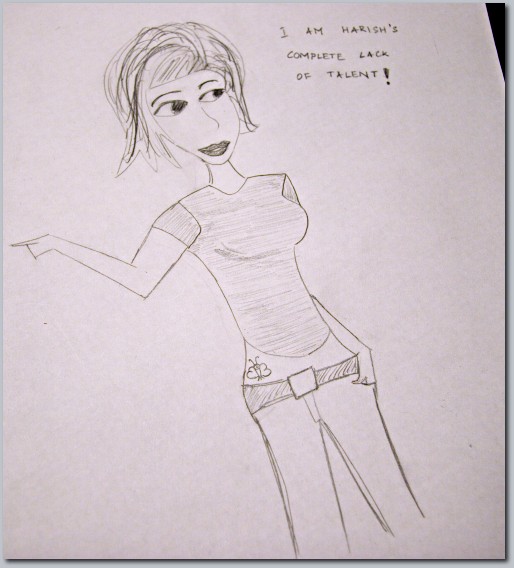
Like I’ve been mentioning at points, I have a bunch of ideas toward a new comic series. Unfortunately, I can’t draw. I thought I could fix it by reading a little as to how the real artists and animators do it, and it turns out some of them first form a clear reference sample of all their characters in various situations (poses, emotions), and them use those as standards, as needed in the story.

Easy enough, one might naively assume. I decided to attempt an as-yet-unnamed character based on Amy in (my favourite, by far) Scary Go Round. Here is our “Amy” look-alike giving directions.

Poor rendition.

After a bunch of attempts, it is clear. I cannot draw. Notice however, strict adherence to “rules”, like the rule of thirds. The head, the torso and the legs are each a third of the total height of the character.

I am my complete lack of surprise.

Probably Racist

(This is a guest opinion piece. Whose? It doesn’t matter. I may or may not agree with the words that follow. If you find them offensive, you have no concrete reason to hate me, because I probably didn’t agree with anything said. All occurences of “I” below are used by our mysterious guest commentator, they don’t mean me.)

It was unbelievably cold. It was late, and I still had a hard night’s work ahead of me. I decided to tank up on food and drink to fuel me through the challenges ahead*. It was then that I saw it, a lone poorly published news paper. Curious, I peek into it and read a most intriguing article about standardised testing, and coloured people. The only thing that was common between my beliefs and the article, was that tests were hate-worthy.

It began pleasantly enough, building a case as to why standardised tests (and I extrapolated that to tests in general), are evil. How they fail to truly measure the intellectual capacity of the testee (I don’t really know if that’s a word, but that hasn’t stopped me from using such before). It then branched off into a slight history lesson dealing with the origin of tests as a measure of intelligence. All was fine, until that point, where the author emphatically exclaimed all tests were formulated by people forward (rich, white) in society, and how the tests were biased to suit their ends as a result. He then proceeded to explain how today’s tests, such as the SATs have been derived in some form or the other from these original tests, hence “inherently” biased. In order to support his claims, he spouts statistics pertaining to how well forward (rich, white) people do in comparison to backward (poor, black) people — how most results always seem to claim (say) 89% of the blacks are morons. He went further establishing a correlation between income and scores, as in quantitatively stating how an increase in parental income of so much results in so many more points on such and such test.

Then, by his insane logic, all one needs to do to ace any test, ever, is to be born/adopted by billionaires (who’re white, of course). Anyway, moving along because things don’t stop there, there is more.

There is a class of people, called the somethings (I should know the word, but it’s late, and I’m tired to look it up) who honestly believe some classes people are “inherently better” than other classes. Furthermore, they will go to extreme lengths, like trying to exterminate all the “weaker sections” to rid the world of all their evils — stupidity, poverty, forced prostitution … . Think Hitler. Now, according to our author friend, all this testing business is some sort of giant conspiracy involving people of this sort to establish the social hierarchy they desire — as biased tests imply poor scores for the black people, poor scores imply a lack of earning potential, lack of earning implies poverty, and poverty, by definition, leads to poor test scores repeating the vicious cycle.

Enough, that’s about all I can take.

You know why tests are bad? They’re bad because you cannot test “how much or little a kid learnt” over months and years in something like a couple of hours. And even given more time, you definitely cannot really test them over a broad enough spectrum to honestly evaluate how much they know. They’re bad because when you’re young, you should be out playing and exercising your creativity and curiosity, not cramming for some algebra test. They’re bad because they have so much riding on their outcome, that some kids cannot take the pressure (one no kid should ever be subject to in the first place) and end up cracking. They are bad because they attempt to force kids to learn in a very unnatural way. Kids are inherently curious, infinitely creative and naturally absorb anything thrown their way. The only inhibitor here is you forcing things down their throats threatening consequences of a bad test score.

Tests are not bad because some sets of people do them worse than others. It’s the same test. It is just as hard for everyone. If one set constantly does worse than the others, there is only one explanation — They are inferior, intellectually.

I will not go as far as to say, and therefore do not deserve to exist.

I’m too lazy to bag my own groceries.

*Instead, of course, I ended up writing most of this piece.

2004’s Bests

Filtering out the noise, so you don’t have to.TM

2004 has been gone for about two weeks now, and rather than bitch about the things I absolutely hated last year (which is arguably a lot more fun, but it does involve a lot of work to get right), I’m going to be a little different and list things which I actually enjoyed tremendously. They aren’t all from 2004, but that was when I got to experience them.

If you’ve experienced them earlier and find what I say redundant or boring, I’ll refund the amount you paid me to write this piece. And in the following, I use the word “best” loosely.

Best Talk — Free Culture — Lawrence Lessig, OSCON 2002

It’s a fabulous talk. Apparently he’s given many more like so, but this is the only one I’ve had the pleasure of hearing. I’ve read a book of his by the same name. (It was sent to me for free by the FSF out of the kindness of their hearts.) I hope that one day I can give a talk like this. The topic doesn’t matter, whether the audience agrees with me or not doesn’t matter — I’d just like to match up to the delivery style.

You should probably listen to it, not because of how cool it sounds, but because the topic is insanely pertinent to you, whether you know it or not.

Best Photo Gallery — India 2004 – Another try — Maciek Da

This person has other fantastic galleries as well, but this one almost brought me to tears. I cannot believe my country could be seen in such a beautiful light. Its existence and consequent inspiration is one of the primary reasons I’ve upgraded my photography hardware, trying to get it to be suited to portrait photography. More importantly, upgrade myself to be more people friendly. I know I can’t come close, ever. But it will be a fun journey trying to get there.

Best Article — How Long Is Your Digital Trail? — Regina Lynn

In this day and age, it is easy to get disconnected when you don’t want to, and so hard to disconnect when you need to. This article is requisite reading for anyone of my (our?) generation.

That’s all I need to say about it.

Best TV Show — Coupling — BBC

If you have access to an untainted BBC channel, or a store that sells DVDs, this is something that you shouldn’t miss. From characters brilliantly sampling all extremes of the human psyche, to hilariously crafted (non-punchline-oriented) dialogue, to fun insight into gender differences, to the best use of “not-necessarily-linear-or-single-or-forward-time-based” story progression (you have to see it to know what I mean) … to so much more, this show has the finest bits of just about everything.

Plus, I must admit it is a pleasure to hear “normal” (Commonwealth) English for a change.

Best Movie — I Heart Huckabees

An oddball story, with a weird feel, with curiously different characters, with a fun soundtrack and a warm fuzzy ending.

Makes you laugh. Makes you ponder. Makes you laugh some more. What more could you ask for?

Best Music — Mozart: Concertos for Flute and Orchestra

I know I’m a little (OK, a lot) late on this one, but MY GOODNESS. I cannot put down in words how I feel about these, but such pieces [~9.24 MB, MP3] “speak” for themselves, almost literally.

Best Book — On the Shoulders of Giants — Edited by Stephen Hawking

When I was a few-year-old child, I remember telling my mom how wrong a time I was born at. I was bitching about how everything that could be invented or known, already was, making my task near impossible. My task being “further relevant contribution” to the intellectual community.

This book contains translations of some of the greatest works of all time in the field of physics, and carefully weaves connections between them articulating how later scientists use the insight gathered by their predecessors and extreme intuition to put forward even more brilliant theories explaining phenomena around us.

I have to admit there is quite a bit in the details I don’t have the ability to read yet. But mark my words, a few more classes in “Tensor analysis on manifolds” and I will be at the point I always wanted to be. To be able to understand, and if lucky, extend on past their glorious work.

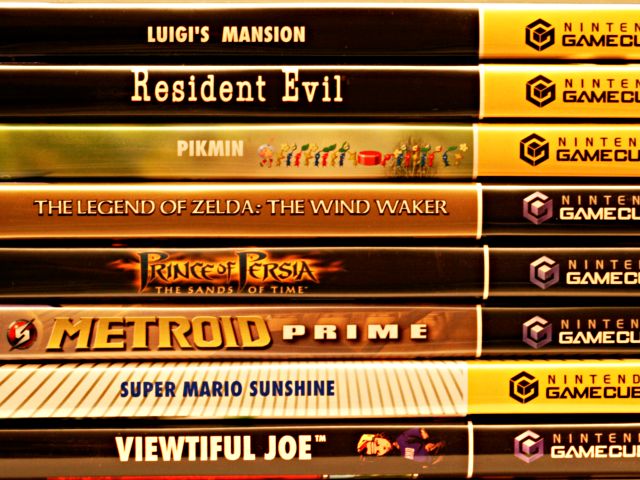
Best Game — The Legend of Zelda: The Windwaker — Nintendo

What more can I say about this game? I would say it is worth it to buy a GameCube to play just this one game. I’ve, in time started building a small game collection, but this is one game I can never get tired of.

The universe they’ve built inside is extremely huge. I’ve “passed it”, what, two times now, and still I keep playing it to go out and explore. And still find new hidden gems! The story is brilliant, the characters are cute and you get “into them” easily, the musical score is stellar, the capability to just run around and find things is almost exhaustingly spectacular. It is probably one of the best games I’ve ever played, across platforms, rivalling other greats such as Grim Fandango.

People call me antisocial

I beg to differ; I am a sociophobe. I don’t hate social events or gatherings or people in general, I FEAR them. I fear awkward social situations, I fear groups of people I don’t know, I fear… pretty much everything that’s pertinent to having a life.

I vividly remember this one incident. I was 4, and this good friend of mine (yes, the one who’s GETTING MARRIED at TWENTY-THREE) had a birthday party to attend later during a day I was at her place, playing. So, of course, I was invited to go along. Note here, a party, with a bunch of people I don’t know. (Friends’ friends do NOT count as people you know.) So I freak out, and invent a clever lie—amounting to something like “Oh, but I’ve gotta go, my mom is waiting outside to pick me up”. I then skip out, walk an insane distance (we didn’t live close at all, and it is not normal (and quite unsafe) for a few year old to tread the journey, let alone unsupervised) and reach home. There, I conveniently invent another lie about how her mom dropped me off, and had to rush off somewhere for an appointment so couldn’t come in.

Perfect, I was a born evil genius.

Of course, there was quite a bit of confusion later, and I was given a stern talking-to, when people found out what I’d done. But it was worth it, I avoided the new crowd; I was safe.

Yes, I’d rather be hit by a truck while hobbling across a street than meeting a bunch of kids and trying to have a good time.

Fast forward twenty years into the future.

Contrary to popular belief, I get invited to random parties all the time. Some arbitrary person’s friend’s roommate’s sister’s something, sure, why not invite the one guy whose ONLY FEAR IS BEING INVITED? Being older, the fear is just the same, and unmitigated. But my methods of evasion have gotten more and more sophisticated with time.

Being the budding psychologist that I am, once in a (long) while, I do beat the fear (when the circumstances are a little more ideal) and go ahead with whatever it is someone’s planned and thought of inviting me for. Why? Because I don’t want them to stop inviting me, dimwit—I just fear going. I do this just enough to keep my name on whatever guest lists, but still fear it mortally.

Like recently, today evening actually, there was this thing that basically involved “a great drunkening”. This eventually boils down to random folk, quite a bit of alcohol, and me getting into insulin shock because I hate bitter things, and I down more Sprite or whatever than my body can handle.

Now that I’ve grown in sophistication, I’ve stopped explaining to people I can’t make it because:
a. I am very uncomfortable around them, and fear them
b. The concept of getting drunk does nothing for me
c. and so on.

So my new found excuse is hinting something along the lines of “I’m a recovering alcoholic, please don’t tempt me”. I don’t actually say it, or use the term “AA,” but I weave around that with words. They tack on a few assumptions and voila. This way, I am not bugged to explain what my beef with them or alcohol is, and I pick up sympathy points from the most arbitrary people.

You’d be amazed how nice people who’re sorry for you can be.

Point being, I’m sure as hell am not antisocial. I’m a sociophobe.

Get your terms straight.

It’s the end of an era

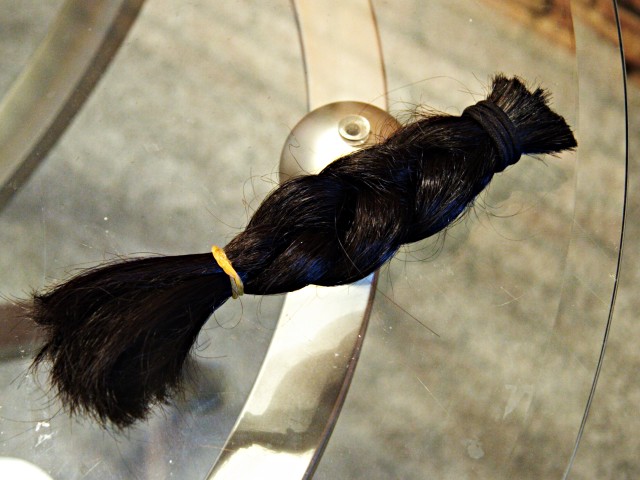
Today, I got my hair cut. And this time, it was “for real”. Here it is, err was. I’ve never plaited my hair before, but the hair-dresser lady thought it would be hilarious if it was before she cut it. I concurred.

If you’re reading this, please inform anyone else who knows me and might be interested. I’d rather not give them a rude shock personally when we meet.

Enough said.